Ancient is the new young. Would you agree? With the growing popularity of travel to historic places like Uzbekistan in Central Asia, I would say so. Since the country started easing its entry requirements in 2016 it has experienced steady growth as an emerging travel destination. One of its oldest cities, Bukhara, dates back 2,500 years. Back in the day, it was a cultural and economic hub for centuries, being an integral part of the famed Silk Road. Today, it is often described as an “open-air museum” and one of the best presevered Islamic cities from the 10th to the 17th centuries CE. During the Soviet era, its historic architecture remained largely intact.

So, what is there to see in this intriguing city found in the southwest of Uzbekistan? From what I have learned, history itself is the draw of Bukhara. The images look not only Instagrammable but downright stunning, with beautifully designed architecture inlaid with blues, greens, and golds that reflect the sun while capturing the ancient feel of this UNESCO World Heritage city. The historic centre can easily seen on foot, in a compact walkable area. I imagine admiring the towering Kalyan Minaret and marvelling at the stately Ark of Bukhara Fortress as it was in ages long past. With over 140 buildings listed under UNESCO, I cannot begin list them all here, yet I can name a few that stood out in my research on Bukhara.
The historic center of bukhara
- Ark of Bukhara – an enormous citadel dating back to the 5th century, it has been built, destroyed (including by Genghis Khan), and rebuilt a number of times. What remains today is all that survived Soviet aerial bombings in 1920
- Bolo Hauz Mosque – a Friday mosque built in 1712, it has remained in use, even throughout the Soviet rule of Uzbekistan
- Chor Minor – the gatehouse of a former madrasa (a school of Islamic teaching), it was built in 1807, showcasing its four towers, each domed with blue tiles
- Lyabi-Khauz Ensemble – a serene and relaxing artificial pool surrounded by the Kukeldash Madrasah, the Nadir Divan-begi Madrasah, the Nadir Divan-begi Khanqah (monastery)
- Po-i-Kalyan Complex – comprised of the Kalyan mosque, Kalyan Minaret, and the Mir-i Arab Madrasa, they were constructed between the 12th and 16th centuries, with the minaret offering a dramatic presence as it towers at 46m / 151 ft
- The Trading Domes – these four domes, Tim Abdullakhan, Toqi Sarrofon, Toqi Telpak Furushon, and Toqi Zargaron, were the centre of bustling commerce in 16th century Bukhara and are still in use today
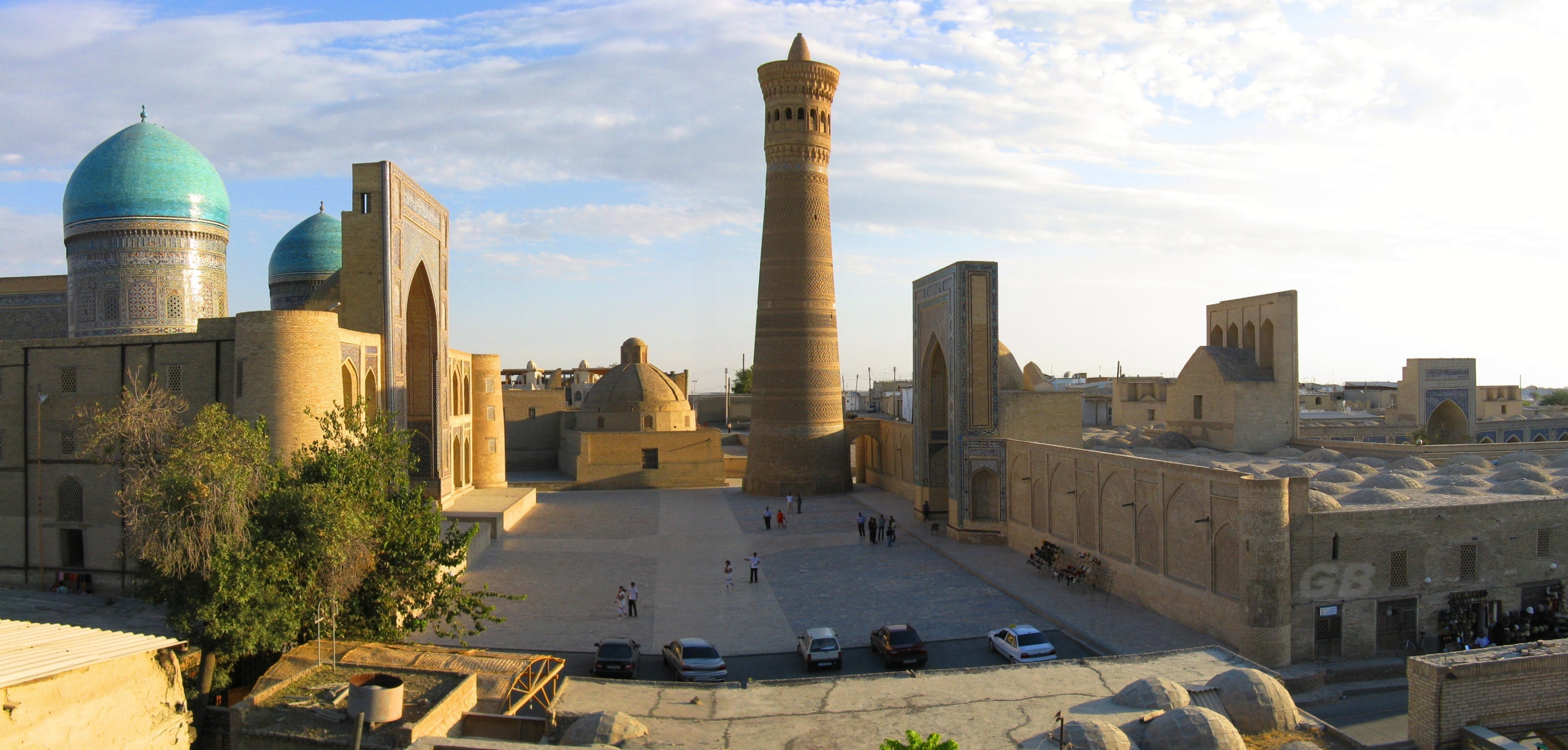
more of bukhara
- Bukhara Observation Tower (Shukhov Tower) – built in the 1920s, this former water tower now whisks people up to the top, offering panoramic views of the city
- Central Market – shop with the locals at this busy and popular market offering spices, nuts, foods, souvenirs, and items for daily life.
- Samanids Park (Samani Park) – enjoy a leisurely stroll amongst the trees, visit landmarks such at the Samanid Mausoleum, and have family fun at the small amusement park — complete with a ferris wheel — at the city’s largest park
- Tea culture – visit any number of tea shops to enjoy the favoured drink of the area, often served with local treats
- Traditional Hammam Experience – take part in the age-old tradition of steam, scrubs, and massage at a number of hammams and leave you clean and refreshed

Uzbekistan has been on my travel list for some time now. I have envisioned myself visiting its capital city of Tashkent and the famed city of Samarkand. Now I have added Bukhara to that list. Would you visit Bukhara? Or have you already seen all its sites? Leave a comment below as I’d love to hear about it.




Leave a note from your corner of the world — I’d love to hear it